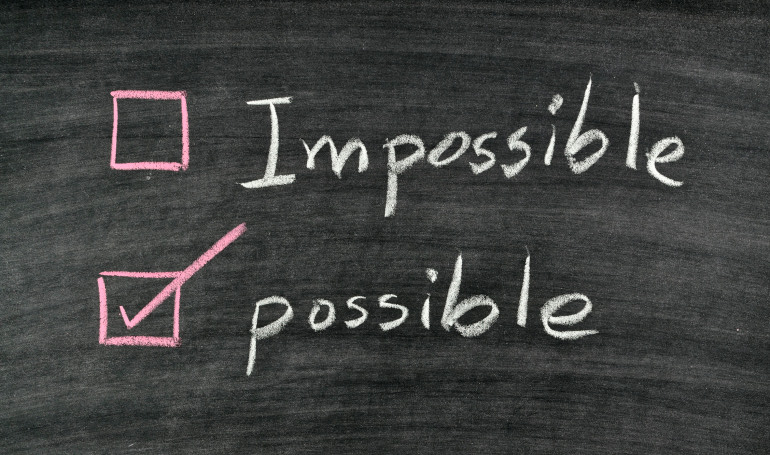
‘Resilience’ is a word we’re hearing a lot at the moment, it’s a favourite with authors of ‘self-help’ books, but what does it mean?
The Collins Plain English Dictionary describes having resilience as being able to recover quickly from unpleasant experiences. A resilient object is described as being strong and not easily damaged.
In life, resilience is bouncing back when things go wrong. How crucial is that in our current, topsy-turvy world?
What dictionaries don’t say (but self-help books probably do) is that resilience comes from within a person and has everything to do with the way we ‘talk’ to ourselves. It’s about how we react when something goes wrong or is far more challenging than we hoped it would be.
Why does it matter?
Resilience is an essential life skill for handling relationships, work and education. It’s a skill that you have to keep practising and strengthening as you tackle lots of differing challenges. When your first thought is, ‘what’s the point, if I get past this there’ll be something else?’ that’s your inner-voice talking. Having resilience will help you answer back with positivity (but not necessarily politely)!
Resilient people acknowledge that things will not always go to plan; they form definite goals and the motivation to achieve them. They don’t worry about what other people think, especially friends or peers who are not as focused or don’t have goals.
Some key ingredients of resilience:
- Pay attention to sleep, exercise and managing stress.
- Listen to how you ‘speak’ to yourself. Be kind to yourself and try to change your thoughts from ‘I can’t do this’ to ‘how can I do this?’
- Change your response. You can’t always control what happens, but you can control how you react, life doesn’t go to plan, and we have to deal with it by adapting (never has this been more relevant!!)
The current educational uncertainties are having a massive impact on students who need additional support. The good news is that you can build and strengthen your personal resilience anytime, anywhere!
7 practical tips for building resilience for home-learning
- Keep your best work in a separate folder or pinned up somewhere. These will remind you how far you’ve come when you think you’re not making any progress
- Surround yourself with positive quotes! Stick them up in your workspace or even get an app to send you one daily for example https://apps.apple.com/us/app/motivation-daily-quotes/id876080126
- If a new piece of work seems like a stretch, go back a step and repeat the last exercise you finished before having a go at the new task (we do this at Kip a lot!).
- If you can typically focus comfortably for 20 minutes, aim for just 10 minutes when you’re up against something challenging.
- Set yourself some SMART goals that are realistic and achievable, break them down into small chunks. SMART means Specific, Measurable, Achievable, Relevant, and Time-bound. It’s much more effective to say, for example, ‘I will be able to add fractions with different denominators by 08/11/20’ than ‘I will understand fractions by the end of this week’! If your goal is too vague, it seems unachievable, and you’re more likely to give up!
- Discover how you problem-solve best – in the shower, walking the dog, cooking, running? If by doing ‘something else’ you can give your brain the abstract space and time to think about a problem differently, then do it! Sometimes, taking a step back and ‘resting’ helps us achieve our goals, but we often think we need to go, go, go!
- Finally, think of your mistakes as a chance to learn and improve. Thomas Edison made thousands of failed prototypes of the electric light bulb before he got it right, each one, a discovery of how not to invent something! Imagine the world today if he’d not found some resilience.
Useful resources
Encourage your teen to have a listen to this podcast on resilience (and check out the www.unstoppableteen.com website in general!):
https://unstoppableteen.com/how-to-improve-high-school-grades-by-being-more-resilient/
If you want to improve your resilience, there’s a wealth of activities at https://positivepsychology.com/resilience-activities-worksheets/
Here’s a great book about perseverance to read with younger children.
https://www.amazon.co.uk/Most-Magnificent-Thing-Ashley-Spires/dp/1554537045
Here’s another, that’s a great introduction to a growth mindset (watch out for a blog on this!):
https://www.amazon.co.uk/Girl-Who-Never-Made-Mistakes
And a final one:
https://www.amazon.co.uk/Beautiful-OOPS-
Liz Martin, of Hull Dyslexia Assessments, is a Specialist Dyslexia Teacher and Assessor. She has a Post Graduate Certificate in Difficulties in Literacy Development (Dyslexia) and has a current practising certificate with PATOSS. Liz also has experience in teaching and supporting children and young people with Dyspraxia, Visual Stress and ADHD. Liz also offers tuition online and at Kip McGrath Hull East.
Hull West Centre Director, C-J Lingard, holds a Master of Social Science degree and a Post-Graduate Certificate in Education. C-J’s teaching experience has taken her across the globe and into a diverse range of teaching environments. Kip McGrath Hull West offers tuition for primary and secondary students in English and Maths